


Hello, my bespectacled friends!
This week: AI-powered smart glasses are showing promise in slowing cognitive decline among dementia patients, the era of Chinese biotech bargains appears to be ending, RFK Jr.’s controversial plans to alter childhood vaccine schedules have come to a halt, a multimillion-pound investment is backing a new treatment for rare kidney disease, and experts are calling for the inclusion of pregnant women in clinical trials to avoid repeating the mistakes of the thalidomide era.
See you next week!
Dodo
If there’s anything you’d like to see in future editions of Biotech Dodo, send us a message.
Discover 🔍
🤓 AI software for smart glasses wins £1m prize for technology to help people with dementia (The Guardian): A UK startup has bagged the Longitude Prize on Dementia for CrossSense: AI-enabled smart glasses with a “chatty” cognitive assistant, ‘Wispy’. Equipped with a camera, mic, and speakers, the glasses offer prompts, floating text, and friendly conversation to guide wearers through everyday life. In trials at the University of Sussex, participants identified 82% of objects correctly with the glasses, versus 46% without. Nifty!
Our take: The fact that memory gains persist once the specs come off suggests CrossSense may lean closer to neuro-rehabilitation than mere assistive tech. But the real test is still to come. A four-week in-home pilot is planned for late 2026, and larger controlled trials are needed to prove meaningful real-world benefit. With a one-hour battery life, subscription costs, and data privacy concerns still unresolved, the challenge now shifts from a clever prototype to something people will actually use day-to-day.
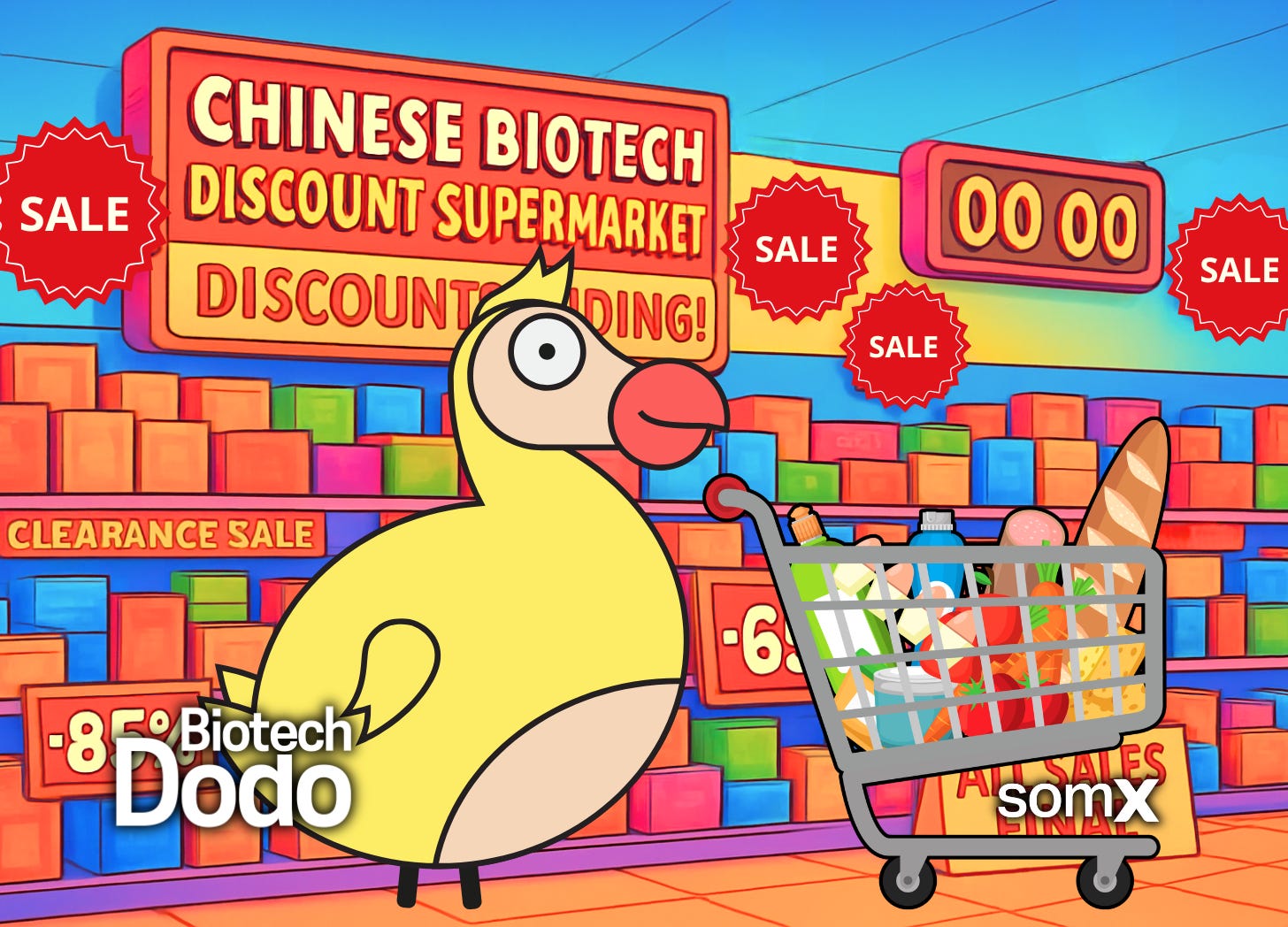
🇨🇳 As Chinese biotechs recognise their value, the bargain era may be over (PharmaVoice): China’s biotechs are exiting the discount aisle and discovering their true value. Licensing deals jumped to 92 in 2025, with average upfront payments soaring from $102M to $141M, signalling global pharma giants like GSK, AstraZeneca, and Lilly now see real value in Chinese pipelines. Blockbuster deals, like GSK’s $500M upfront for Hengrui’s COPD/oncology assets, prove Big Pharma still dominates.
Our take: China isn’t just producing better assets, it’s producing more of them than the market can comfortably absorb. In crowded areas like oncology and cell therapy, global pharma now has a surplus of similar bets to choose from, leaving a growing backlog of unpartnered programmes. For those companies, the choice is stark: build late-stage muscle or shelve viable programmes. But while China’s faster, lower-cost domestic trials offer a clear advantage, without deep experience in late-stage development, many promising assets could still stall before reaching market.
🧑⚖️ Judge blocks RFK Jr’s changes to US childhood vaccine schedule (BBC News): A federal judge has slammed the brakes on RFK Jr’s Department of Health and Human Services (HHS) vaccine overhaul, including blocking changes in regulations which would cut childhood shots from 17 to 11. Medical groups cheered the result as a win for science over politics, with the ruling citing “procedural failures” and “bypassed” expertise. The case was brought by the American Academy of Paediatrics, which argued that RFK JR’s actions violated Federal Law. The Trump admin is expected to appeal amid chaos for parents, insurers, and docs.
Our take: Kennedy’s attempt to cut the schedule and sidestep the usual advisory process has been blocked, returning vaccine guidance to the standard CDC framework. But it’s also exposed the limits of that system. States already hold the legal authority to diverge, and some are signalling they’re willing to use it to counter federal instability. The result isn’t fragmentation (yet!), but the conditions for it are starting to fall into place.
🫘 R1 starts up with $78M, aiming for a better kidney drug (BioPharma Dive): The Series A funding to aims fix hyperphosphatemia, a challenging complication of dialysis where excess phosphorus ravages bones and hearts. The therapy AP306, licensed from China’s Alebund, blocks multiple gut phosphate transporters for steadier control. Current binders such as Renvela and Xphozah demand handfuls of tablets per meal, leaving nephrologists juggling pill fatigue, adherence issues, and frustrated dieticians.
Our take: Phosphate binders like Renvela haven’t just dominated the market, they’ve defined it. Cheap generics, predictable behaviour, and seamless reimbursement have hardwired prescribing habits. And AP306’s “lower pill burden” is less transformative than it sounds, as it still requires three-times-daily dosing. This therefore isn’t a science problem, it’s a switching problem. Unless the therapy delivers a step-change in outcomes, nephrologists have little reason to abandon what already works.
And finally…
🫄‘Test drugs on pregnant women to stop another thalidomide scandal’ (The Times): Pregnant women are shut out of 99% of clinical trials, leaving doctors data-blind on vital medicines like antidepressants and prompting many mums-to-be to stop treatment, risking postnatal depression and suicide. The British Pharmacological Society is calling for more inclusive research, including “pregnancy and breastfeeding investigation plans” within the medicines licensing framework, so decisions about medicines can be evidence-based and better balance maternal benefit with foetal and infant risk.
Our take: MHRA, FDA, and EMA liability frameworks treat pregnancy as a high-risk category, with the threat of post-trial litigation making sponsors understandably cautious. The result is a system that protects foetuses from research, but leaves mothers exposed to guesswork. With most drugs untested in pregnancy, women are forced to choose between untreated illness and uncertain risk. The bigger failure isn’t including pregnant women in trials, it’s excluding them for so long.
Tune in 🎧
💡How to optimise your biotech company for partnering, licensing, and business success: Janita Good shares her expert insights on how biotech leaders can plan commercialisation from day one, and balance investor optimism with deal realism.
🧑🔬How bench scientists are getting ahead with AI: RNA biologist and bench scientist Heather Karner reveals how practical AI tools are reshaping lab life.
🦀 Radiotherapeutics for CNS cancers with plus therapeutics’: Dr. Marc Hedrick discusses the company’s strategic pivot to radiotherapeutics for brain cancers, as well as the science behind its lead candidate Reyobiq.
Apply ✍️
🧫 Account Manager, Thermo Fisher: Love building relationships that fuel scientific progress? You’ll lead commercial activities across key accounts, sell and support Thermo Fisher’s full CMD portfolio, and drive strategic growth through collaboration.
💊 Consultant or Senior Consultant, Pharma & Life Sciences, Baringa: Want to help redefine how medicines reach patients? You’ll advise clients from R&D to commercialisation, designing global operating models, launching brands, and enabling data and AI transformation.
🌍 Global Life Sciences Business Developer, Promptly Health: Excited by the rise of real-world data? You’ll scout and qualify new opportunities across RWE, HEOR, Market Access, and Digital teams, shaping early engagement for complex enterprise deals.
RSVP 📆
🧬 26.03 | The CGT Circle | London, UK: A networking event dedicated to the cell and gene therapy community. Designed to spark conversation and new connections, it brings together scientists, founders, and industry professionals working at the forefront of advanced therapies.
🇮🇹 16-17.04 | 16th International Conference on Biotechnology | Rome, Italy: Under the theme “Living Technologies for a Changing World: The Future Begins in Biotechnology,” this global meeting celebrates innovation where biology meets imagination, exploring how living systems can heal, adapt, and drive sustainable transformation across health, energy, and the environment.
📑 29.04 | The Hardian Health Tech Summit | London, UK: The Hardian team will be joined by representatives from the MHRA, FDA, NICE, NHS leaders, and more across the healthtech world for real-world insight into regulation and market access in medical devices.
Got news, jobs or events you think are worth coo-ing over? Post an event here, or email us at biotechdodo@substack.com!

We’re SomX – a communications and creative agency trusted by biotech, pharma and healthtech pioneers. We craft strategy, content, PR and design that translate complex biology into compelling stories and investor‑ready excitement. Get in touch to amplify your science beyond the lab bench.